* 8 Common Ways You Accidentally Abuse your Dog or Horse
Skip to Horses
You try hard to meet your animal's needs, as you believe they need to be met. You also want to make your own life easier and more convenient. But, are you inadvertently killing your animal with kindness? ...
Common ways we inadvertently abuse our DOGS ....
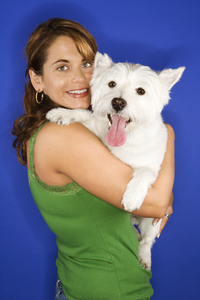
COMPANIONSHIP Do you leave your dog alone all day while you are at work? Dogs are gregarious social animals that need the assurance, safety and emotional comfort of companions
EXERCISE Do you walk your dog at least twice a day? Dogs need exercise, and your instinctively wants to 'patrol' its territory
PLAY Dogs are pack animals. They need social stimulation and unconfined movement. Do you let your dog run free with other dogs occasionally? Do you play with your dog? Playtime teaches social order, manners, and offers important behavior lessons from interaction
MENTAL STIMULATION Do you teach your dog tricks or to perform specific functions, such as fetching the newspaper? Dogs need mental stimulation and a 'job' to do so they feel useful and understand their value and status in your family. A bored intelligent dog will cause damage or chaos
PROPER DIET Do you feed your pet commercially prepared dog foods? Dogs need raw meat that contains no chemicals and occasional roughage. Commercial foods contain corn, grains, by-products. Meat ingredients may contains hormones and drugs and from euthanized horses or cattle
(When I had my horse euthanized, I later discovered the animal disposal company was really a well-known pet food manufacturer. My euthanized horse had a debilitating disease. He had also been given massive drugs to euthanize him.) Is that what you want your dog or cat eating?
STRUCTURE Do you maintain consistent discipline of your pet? Dogs are pack animals that thrive within a strict social order. They only feel secure when they clearly understand their 'rank' in your family, and know who is their dominant leader. Problem behavior starts when a dog thinks it is the pack leader or believes its role is to be your baby
WEANING Was your puppy or kitten weaned at 6 weeks of age or younger? Did your puppy cry for days when it was weaned? Animal mothers will wean their own babies at the ideal time, allowing the youngster to feel secure and independent on its own. Early weaning often causes emotional problems later in life
SAFTEY/STABILITY Dogs are sensitive to the moods and feelings of their pack (family). If there is dissension or strife in the home, or a marriage breakup, your dog feels it and can become worried or distressed. NEVER turn your pet (or children) into a weapon against your partner. Don't make them choose sides, or have no choice/voice
Why your dog may need our live flower frequencies ....
- Frustration from being unable to communicate with you
- Anger or depression from rough handling or punishment
- Depression or frustration from confinement or lack of exercise
- Lack of social structure and rules or boundaries
- Grief from a loss of companion or change in circumstances
- Accidents, shock
- Lack of companionship, loneliness, isolation, or neglect
- Not feeling safe
- Boredom, no enrichment
- Care that is unnatural for a dog or does not meet its needs
- Abandonment, multiple owners or caretakers, preventing the animal from bonding deeply with anyone
- Owners or caretakers who have emotional issues or family/marital problems
- Too much work and no 'play'
- Early or forced weaning
-
How we can help your dog....
8 Common ways HORSES are abused by misguided 'kindness' ...
Abuse happens when we relate to our horses the way through our own comfort and not the way a horse measures comfort. Horses are social animals that rely on each other for safety and comfort
UNCONFINED MOVEMENT Does your horse or pony roam free, or is he confined in a stall for most of the day? A horse needs sunlight for a minimum of 2 hours per day on the retina of his eyes to maintain mental function and ensure production of serotonin. Insufficient sunlight affects blood pressure as well as hormone levels and the pineal gland. That, in turn affects the entire endocrine system
A horse is highly intelligent. It needs to play every day and experience freedom, movement and joy. Horses are social animals. So, this includes interacting with other horses, rolling, bucking and grazing
Imagine a child of 4 yrs old shut up for most of the day and only brought out to work. Boredom results in vices such as cribbing, chewing, wind-sucking, stall walking, and weaving. Vices are signs of depression (giving up), boredom, lack of freedom or movement, and unhappiness
When the horse performs a stress-relieving 'vice', he achieves a release of enkephalon (similar to endorphin), which has a pain-killing effect. Like adrenaline, enkephalon is addictive. That is why it is hard to stop a horse from repeating the vice
A horse also needs to travel at least 15 km per day to stay sound and healthy. The frog under the hoof acts like a pump to circulate blood. Every time the horse takes a step, the pressure applied against the frog pushes the blood supply back up the leg to promote healthy circulation. A standing horse will develop lameness issues. As well, horses need to be able to roll freely
COMPANIONSHIP Is your horse separated from other horses by fences or stall walls so he cannot interact naturally, touch other horses, and feel vital companionship? Horses are social animals. They need the emotional comfort of touch and interaction with one another. They rely on each other for safety. A solitary horse feels higher levels of insecurity and stress, which can lead to behavior and health issues
COMFORT Do you place a blanket on your horse or shave his coat? A horse's fur is comprised of hair shafts that are hollow. Air in the shaft acts like insulation. When the weather is cold, the horse's skin will cause the hair to stand up more, creating an insulation of warm air without causing the horse to sweat or catch a draft. When you blanket your horse, this natural mechanism is thwarted. So, your horse feels cold and his body is vulnerable to changes in weather
MENTAL STIMULATION Do you ride in a ring or arena all the time? This is not only very cruel and mind-numbing to a horse, it also promotes hoof and joint disorders, such as navicular. It makes their world very small, which shuts them down mentally and emotionally!
Horses need variety, enrichment, and mental stimulation, the way they would experience in the wild. They need to be able to experience expanses so they can stretch out and move in a relaxed manner. Take your horse for a relaxed hack regularly, particularly before competitions, and you will find the animal performs better and has a better attitude. It will get used to a wide range of experiences and be better able to adapt
FREE-CHOICE FRESH GREEN FOOD Do you feed your horse 2 or 3 times a day at periodic intervals? Or does your horse have daily access to grazing on grass?
In nature a horse will graze throughout the evening, night and morning, and rest during the hottest hours of the afternoon when sugar content in grass is dangerously much higher. Eating at that time can cause colic, because sugars ferment quickly inside the warm animal
Do you feed hay and grains? A horse has a very delicate digestive system. A horse is not a ruminant. Its digestive system is designed for food to pass through quickly so that gases do not build up. When a horse has nothing in his stomach he feels very uncomfortable
This means a horse needs to eat constantly, and the food needs to be fresh. Ulcers and other stomach disorders can result if a horse goes for hours between meals. In fact, a horse will graze 15-20 hours per day if left on his own. So, food should be available most of the time
Your horse needs free-choice pasture and hay to graze and nibble constantly. Dry hay and grains are harder for a horse to digest, so plenty of water needs to be readily available. More importantly, the food needs to be at ground level. The frog under the hoof acts like a pump to circulate blood when the horse's neck stretches to lower the mouth to the ground. So, food should always be served at ground level to keep your horse sound
FEEDING GRAINS Grains are actually foreign to a horse's natural diet. Horses obtain most of their energy from the sugars present in grass. Carbohydrates are no substitute for this. In fact, many horses are deficient in the digestive enzyme Amylase, which is needed to digest carbohydrates (grains). Feeding grains and processed feeds can result in metabolic syndrome (a pancreas disorder similar to diabetes), or candida infections (thrush in feet, digestive tract or reproductive organs). Processed pellet feeds can contain grain moulds.
Ensure your horse has at least 12-15 gallons of water per day, as well as free-choice salt, and a quality nutritional supplement that includes vitamin E and selenium
SHOEING Do you shoe your horse? In nature, horse's hooves wear naturally on rough ground and are self-trimming. The frog must touch the ground. That's why we recommend barefoot trimming
Metal shoes placed on the feet reduce the frog's natural shock absorption mechanisms within a horse's hooves, resulting in joint stress, especially when walking on hard surfaced such as pavement. While is may seem counter-intuitive, soft bedding and soft footing in an arena or ring also reduce frog pressure and therefore impair blood circulation. Constant circling and bending strains every part of the anatomy. It's not how a horse would move in nature. Eventually this can result in soreness and lameness
SHADE Does your paddock offer shade trees? Biting insects prefer sunlight. Horses can also get sunburned, especially on the nose, and they are susceptible to heat stroke. Horses with liver problems can be photosensitive. Bring your horse inside during the afternoon and leave the horse outside all night to keep him more comfortable and happy
Why your horse may need our live flower frequencies ...
- Frustration from being unable to communicate with you
- Anger or depression from rough handling or punishment
- Ignorance of the horse's needs
- Depression or frustration from confinement or over-stabling
- Grief from a loss of companion or change in circumstances
- Accidents, shock, fearful situations
- Neglect, loneliness, isolation
- Early weaning
How we can help your horse ....
 To enhance your user experience on our website, this site uses cookies.
If you continue to browse, you accept the use of cookies on our site.
See our Privacy Policy
for more information.
To enhance your user experience on our website, this site uses cookies.
If you continue to browse, you accept the use of cookies on our site.
See our Privacy Policy
for more information.

